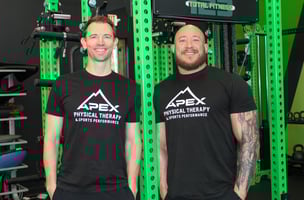

Apex Physical Therapy & Sports Performance is excited to welcome Eric G. Lea, MPT, Cert. DN, to our...
Why Your New Workout Plan Hurts (And How Physical Therapy Can Help)
The start of a new year often comes with renewed motivation to get active, hit the gym, or finally stick to a workout routine. While exercise is one of the best things you can do for your health, many people in Milton and Cumming, Georgia find themselves asking the same question just a few weeks in:
“Why does my new workout plan hurt?”
If you’re dealing with lingering pain, tightness, or discomfort after starting a new fitness routine, you’re not alone. And while soreness can be normal, ongoing pain is not something you should ignore.
Why New Workouts Often Lead to Pain
When you jump into a new exercise program, your body is suddenly asked to move in ways it hasn’t in a while… or ever. Common reasons new workout plans lead to pain include:
1. Doing Too Much, Too Soon
One of the biggest New Year fitness mistakes is increasing intensity, frequency, or volume too quickly. Muscles, joints, and connective tissue need time to adapt, and overloading them too fast can lead to strains, tendinitis, or joint irritation.
2. Poor Movement Patterns
If you already have limited mobility or muscle imbalances, adding workouts on top of those issues with poor form can make things worse. Squats, lunges, running, and lifting all require proper form so that you don’t end up in more pain.
3. Old Injuries Resurfacing
Previous injuries that never fully healed can flare up when activity levels increase. An old ankle sprain, knee injury, or back issue may not bother you day-to-day, but exercise can expose underlying weaknesses.
4. Weakness or Limited Mobility
Tight hips, weak core muscles, or limited ankle mobility can force your body to compensate. Over time, those compensations often result in pain in new areas rather than progress.
Soreness vs. Pain: What’s the Difference?
A little muscle soreness (Daily Onset Muscle Soreness “DOMS”) after a new workout is normal and usually resolves within 24–72 hours. Pain, however, is different.
Signs your workout pain isn’t normal include:
- Pain that worsens with activity
- Sharp or stabbing discomfort
- Pain that changes how you move
- Symptoms that don’t improve after a few days
Ignoring these signs can lead to more serious injuries and setbacks.
Why Physical Therapy Is the Smart Fix
Many people think the solution is to stop exercising altogether, but that’s rarely ever the answer. The goal isn’t to quit, it’s to move better.
At Apex Physical Therapy and Sports Performance, we help active adults and athletes in Milton and Cumming Georgia address the root cause of pain so they can continue exercising safely and confidently.
Physical therapy can help by:
- Identifying faulty movement patterns
- Improving mobility and flexibility
- Building strength where it’s needed most
- Addressing old injuries before they worsen
- Preventing future injuries
Instead of working around pain, physical therapy helps fix what’s causing it.
Why January Is the Perfect Time for a Movement Assessment
January is one of the busiest months for gyms, and one of the busiest months for injuries. Getting a professional movement assessment early can help you avoid common New Year setbacks and build a foundation for long-term success.
Whether you’re new to exercise, returning after time off, or training for performance, physical therapy ensures your body is prepared for the demands you’re placing on it.
Serving Milton and Cumming, Georgia
Apex Physical Therapy and Sports Performance offers one-on-one, personalized care for athletes and active adults throughout Milton and Cumming, GA. Our approach focuses on long-term results, not rushed visits or temporary fixes.
Frequently Asked Questions
Is pain normal when starting a new workout routine?
Mild soreness is normal, but pain that lingers, worsens, or affects how you move is not. Persistent pain is a sign something needs to be addressed.
Should I stop working out if I’m in pain?
Not necessarily. In many cases, modifying your workouts and addressing mobility or strength issues with physical therapy is more effective than stopping altogether.
Do I need a referral to start physical therapy in Georgia?
No. Georgia allows direct access to physical therapy, meaning you can book an evaluation without a physician referral.
Can physical therapy help even if I don’t have a serious injury?
Absolutely. Physical therapy is great for injury prevention, improving movement, and building a strong foundation for fitness and performance.
How do I know if physical therapy is right for me?
If pain is limiting your workouts, affecting daily activities, or causing you to change how you move, physical therapy can help. A professional evaluation can determine what your body needs.
Ready to Move Better This Year?
If your new workout plan is causing pain, now is the time to address it. Book a free consultation with Apex Physical Therapy and Sports Performance in Milton or Cumming, GA, and start the year moving stronger, safer, and pain-free.